Why Not So Neighborly Is Perfect for Game Night
Have you ever been at a fun party with friends and wanted a quick, easy card game with just a little playful competition? Something light that gets people laughing without a long explanation? That’s exactly where Not So Neighborly shines. It’s a fast-paced, light card game that’s easy to pick up and genuinely fun to play with friends. It plays with two to four players, and the core idea is simple: you’re building a neighborhood.
As you play, you’re adding buildings like apartments, parks, houses, restaurants, cafés, markets, and libraries to your neighborhood. Watching your little neighborhood grow is satisfying, but things never stay peaceful for long. After all, it’s Not So Neighborly. There are plenty of ways for your opponents to mess with your plans. Someone might demolish one of your buildings, shut one down with crime, or even start a fire and burn it to the ground. You might be making great progress toward victory one moment, and the next moment your neighborhood is in chaos.
The goal is to be the first player to reach ten build points. A house might be worth one point, while a restaurant might be worth two. It sounds simple enough, but your pesky neighbors are constantly interfering, and that’s where a lot of the fun comes from.
The game comes from FamBam Games, a company started by two sisters, Alice and Jessica, who were inspired by spending time playing games with family. They set out to design something that people of all ages could enjoy together—something accessible, easy to learn, and quick to play. Those family game nights with cousins sparked the creativity that eventually led to Not So Neighborly.

Jessica and Alice founders of FamBam Games
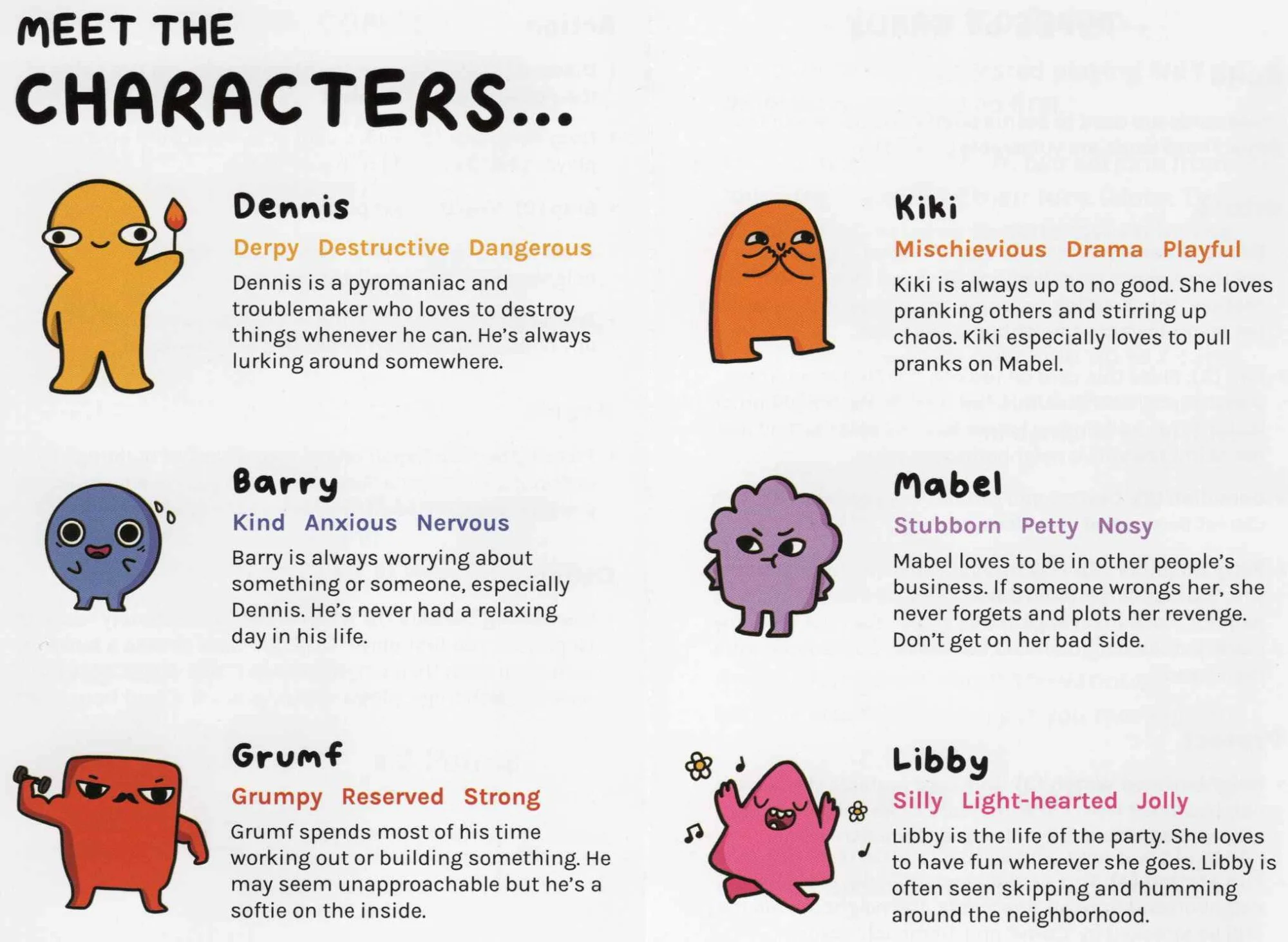
One of the really cool things about the game is its cast of characters. The characters are central to Fambam Games, and their personalities really come through in the artwork. Dennis is derpy and destructive. Barry is kind but anxious. Grumpf is grumpy and strong. Kiki is mischievous and dramatic. Mabel is stubborn and nosy, and Libby is silly and light-hearted. As you play, you start to recognize these personalities, and it adds a lot of charm to the experience. The artwork is fun and expressive, and it helps bring the neighborhood to life.
When you actually sit down to play, your objective is simple: build a neighborhood worth ten points before anyone else does. On your turn, you perform two actions. Usually that means drawing cards, playing cards, or doing one of each. It’s very straightforward, which is part of why the game moves so quickly.
Most of the time, you’ll be playing build cards to expand your neighborhood with things like apartments, parks, restaurants, markets, pools, and libraries. But you always have to stay on guard because attack cards can undo your progress. Cards like demolish, crime, and fire can disrupt or destroy what you’ve built, forcing you to adapt your plans.
Thankfully, there are ways to protect yourself too. A fire station can protect you from fires, and a neighborhood watch can keep crime from affecting your buildings. These protection cards add just enough strategy to keep things interesting without making the game complicated.
There are also action cards that really shake things up. Some let you skip another player’s turn, while others let you steal cards or force discards. One moment you’re quietly building your neighborhood, and the next moment someone plays a card that completely changes the situation. Those sudden moments create a lot of laughter and memorable interactions around the table.
This is one of the big reasons the game works so well at parties. The rounds are quick and energetic, and the turns move fast. With only two actions per turn, players stay engaged and the game never drags. The cards are also very intuitive, so most people can start playing almost immediately without needing a long rules explanation.
Short games like this are perfect for social settings because people can jump in and start having fun right away. You don’t need a big time commitment, and if someone wants to join later, it’s easy to start another round.
Part of what makes Not So Neighborly unique is its theme of mischievous neighbors and playful sabotage. The characters give the game personality, and the constant balance between building and destroying keeps everyone involved. You might focus on building up your own neighborhood, or you might spend your time tearing down someone else’s. Either way, the game stays lively and interactive.
It’s also very portable. The box is small enough to bring along to a gathering with friends, which makes it an easy choice for game night or travel.
This game is great for families, kids, and casual gamers. Because the rules are so light, it works well as either a warm-up game at the start of the night or a quick closer at the end. It’s especially good for people who enjoy interactive card games where you can mess with your opponents a little bit. If you enjoy games like Munchkin, Exploding Kittens, or Love Letter, there’s a good chance you’ll enjoy this one too.
One of the biggest strengths of the game is how quick and easy it is to learn. The gameplay is fast and intuitive, and there’s a lot of interaction between players. It’s also very portable, which makes it easy to bring along wherever you go. On the downside, it only plays up to four players, and the “take that” style of gameplay won’t appeal to everyone. Some people don’t enjoy having their progress undone. That said, the game is so lighthearted that it rarely feels frustrating.
I remember the first time I played it at a game convention. There were two groups playing games side by side. Our group was playing Not So Neighborly, while the other group was learning a heavier game. While they were still working through the rules, we were already playing, laughing, and having a great time. That really captures what this game is all about. It creates funny, memorable moments and gets people engaged right away.
If you’re looking for a quick, interactive card game that gets people laughing and playing together, Not So Neighborly is definitely worth a try. It’s the kind of game that turns a regular get-together into a memorable game night.
Visit Fambam Games website!